



August 5, 2026
HVAC Load Calculation: Why Proper Sizing Matters
Buying a new heating and cooling system is a significant investment, and one of the most critical steps in the process has nothing to do with the equipment itself. An HVAC load calculation is the engineering process that determines exactly how much heating and cooling capacity your home actually needs, and skipping it is one of the most expensive mistakes a homeowner can make. Whether you’re replacing a central air conditioning system, installing heat pumps, or adding a ductless system to a new space, proper sizing affects everything from HVAC system cost to long-term energy efficiency. Split systems are the most common HVAC type in homes, and even these familiar setups are frequently installed at the wrong size, leading to years of wasted energy and unnecessary discomfort. In this guide, we cover:
- What an HVAC load calculation is and how it works
- Why proper system sizing matters for comfort and efficiency
- The consequences of an oversized or undersized system
- What factors go into a Manual J calculation
- How to make sure your contractor is doing it right
If you want a system that is properly sized for your home from day one, our HVAC services include thorough load calculations as part of every installation. We’re proud to serve homeowners in Damascus, MD, and nearby communities with HVAC installation, replacement, and maintenance services, and more.
What Is an HVAC Load Calculation
An HVAC load calculation is a detailed engineering analysis that determines the precise amount of heating and cooling capacity needed to keep your home comfortable under the full range of outdoor conditions in your climate. It accounts for every variable that affects how heat moves in and out of your home, from the square footage and ceiling height to the number of windows and the insulation levels in your walls and attic.
The most widely used method is called Manual J, a standardized calculation developed by the Air Conditioning Contractors of America. HVAC stands for heating, ventilation, and air conditioning, and a proper Manual J calculation addresses all three functions by producing a heating load measured in BTUs per hour and a cooling load measured in tons, which your contractor then uses to select equipment that matches your home’s actual needs.
What Manual J Calculates
Manual J takes into account dozens of variables to arrive at an accurate load figure. No two homes produce the same result, even if they have the same square footage, because the specific combination of construction materials, orientation, window area, and occupancy all affect the outcome.
- Square footage and layout: Larger homes and those with open floor plans require more capacity, but square footage alone is never sufficient for accurate sizing.
- Insulation levels: Well-insulated walls, attics, and crawl spaces significantly reduce the heating and cooling load by slowing heat transfer through the building envelope.
- Window area and orientation: South-facing windows in Maryland gain substantial solar heat in summer, while poorly insulated windows lose heat rapidly in winter.
- Air infiltration: Gaps, cracks, and unsealed penetrations allow conditioned air to escape and outdoor air to enter, increasing the load the system must handle.
- Local climate data: Manual J uses outdoor design temperatures specific to your geographic location to size the system for real-world conditions.
- Occupancy and internal heat gains: The number of people in the home and heat-generating appliances both contribute to the cooling load.
4 Reasons Proper HVAC Sizing Makes All the Difference
Getting the load calculation right is not a formality. It is the foundation on which every other aspect of your HVAC investment rests. Here are the four most important reasons proper sizing matters.
1. Comfort Depends on It
An air conditioning system or heat pump that is the wrong size for your home will struggle to maintain consistent comfort regardless of how high-quality the equipment is. Proper sizing ensures the system runs in efficient cycles that maintain even temperatures throughout every room, control humidity effectively, and respond predictably to thermostat settings.
Humidity control is particularly important in Maryland’s climate, where summer humidity levels can make an incorrectly sized system feel like it is failing even when it is technically running. A properly sized air conditioning system runs long enough during each cycle to remove meaningful amounts of moisture from the air, leaving your home feeling genuinely comfortable rather than just cooler.
- Even temperatures: A correctly sized system distributes conditioned air evenly without hot or cold spots developing in certain rooms.
- Humidity control: Longer, properly timed cycles remove more moisture from the air than the short cycles produced by an oversized system.
- Consistent performance: A well-matched system responds predictably to thermostat adjustments and maintains setpoints without constant cycling.
2. Energy Efficiency Is Directly Tied to Sizing
A system that is even slightly oversized or undersized operates with lower energy efficiency than one that is properly matched to the load. According to the U.S. Department of Energy, an oversized air conditioner can use significantly more energy than a correctly sized unit while delivering inferior comfort. That energy waste shows up on your monthly utility bills every single month for the life of the system, and it applies equally to central air conditioning systems, heat pumps, and ductless systems.
3. Equipment Lifespan Suffers Without Proper Sizing
Short-cycling is one of the most damaging operating patterns for any HVAC system. When a system is oversized, it reaches the thermostat setpoint too quickly and shuts off before completing a full, efficient cycle. This start-stop pattern puts enormous stress on the compressor, the most expensive component in any air conditioning system or heat pump, and on the electrical components that manage each startup sequence.
- Compressor wear: Each startup draws a high electrical current surge. Frequent short-cycling multiplies these surges and accelerates compressor wear significantly.
- Contactor stress: The electrical contacts that switch the system on and off degrade faster when cycling frequency is higher than designed.
- Reduced HVAC system lifespan: Systems that short-cycle consistently rarely reach their rated service life of 10 to 20 years, meaning the homeowner faces higher HVAC system cost sooner than expected through premature replacement.
- Missed maintenance benefits: HVAC systems require annual maintenance for optimal performance, and a system that is already stressed by improper sizing gets even less value from those tune-ups than a correctly sized one would.
4. Indoor Air Quality Is Affected
An HVAC system that short-cycles does not run long enough to filter air effectively, control humidity, or circulate fresh air throughout the home. Air filters should be replaced regularly to maintain efficiency, but even a fresh filter cannot compensate for a system that never completes a full cycle. Energy efficiency can also be improved by using zoned heating systems, which allow different areas of the home to be conditioned independently, reducing the total load the system must handle at any one time. Proper sizing ensures the system runs complete cycles that allow filtration, zoning, and humidity control to work as intended, keeping the air in your home clean and fresh.
The Consequences of Getting It Wrong
Many homeowners are surprised to learn that bigger is not better when it comes to HVAC equipment. An oversized system creates a different set of problems than an undersized one, but both result in compromised comfort, wasted energy, and shortened equipment life.
Oversized System Problems
- Short-cycling: The system reaches temperature quickly and shuts off, only to restart minutes later in a repeating pattern that wastes energy and stresses components.
- Poor humidity control: Short cycles do not run long enough to dehumidify the air, leaving the home feeling clammy even when it is technically cool.
- Stale air: Incomplete cycles prevent the system from circulating and filtering air properly, leaving the home with reduced air freshness over time.
- Higher operating costs: The repeated high-current startups and inefficient partial cycles drive up energy consumption despite the system running for shorter total periods.
Undersized System Problems
- Inability to reach setpoint: An undersized air conditioning system or heat pump runs continuously on the hottest or coldest days without ever reaching the thermostat setting.
- Excessive runtime: Continuous operation without cycling off accelerates wear on every component in the system.
- Higher energy bills: Running constantly to compensate for insufficient capacity reduces energy efficiency and consumes more electricity than a properly sized system running efficient cycles.
- Uncomfortable peak days: On Maryland’s hottest summer days or coldest winter nights, an undersized system simply cannot keep up, leaving the home uncomfortable when it matters most.
What to Look for in a Contractor’s Sizing Process
Not every HVAC contractor performs a proper Manual J load calculation before recommending a system. Some rely on rules of thumb, square footage estimates, or simply match the size of the existing system without considering whether that system was ever properly sized in the first place. This is especially common when homeowners are replacing a ductless system or upgrading heat pumps, where sizing requirements differ from standard central systems. Knowing what to ask protects you from a repeat mistake.
- Ask for the Manual J report: A contractor performing a legitimate load calculation should be able to provide you with a written report showing the inputs and outputs of the calculation.
- Be wary of square footage sizing: A contractor who sizes your system based only on square footage is skipping the most important variables. Square footage is one input among many, not a substitute for the full calculation.
- Question a same-size replacement: If your existing system was uncomfortable or inefficient, replacing it with the exact same size without a new load calculation may simply repeat the original mistake.
- Confirm software is used: Legitimate Manual J calculations are performed with approved software, not back-of-the-envelope math. Ask your contractor which tool they use.
Frequently Asked Questions About HVAC Load Calculations
Homeowners shopping for a new system or questioning the sizing of an existing one often have similar questions. Here are clear answers to the most common ones.
How long does a Manual J calculation take?
A thorough Manual J calculation typically takes one to two hours for a standard residential home. The technician needs to measure or verify the home’s dimensions, inspect insulation levels, assess window area and type, and gather information about occupancy and appliances. Contractors who complete the process in minutes are almost certainly cutting corners.
Can I do a Manual J calculation myself?
Manual J calculations can be performed using consumer-grade software, but doing them accurately requires a solid understanding of building science and the inputs involved. An error in insulation values, window type, or infiltration assumptions can result in a significantly wrong answer. For a purchase as significant as a new HVAC system, having a qualified professional perform the calculation is almost always the better choice.
Does load calculation change if I renovate my home?
Yes. Any renovation that changes your home’s insulation levels, window area, square footage, or air sealing significantly should trigger a new load calculation before selecting replacement equipment. Adding an addition, finishing a basement, or replacing windows with a significantly different efficiency rating all affect the heating and cooling load enough to potentially change the correct system size, whether you are installing heat pumps, a ductless system, or a central air conditioning system.
What if my current system was never properly sized?
If your current system is uncomfortable, produces stale air, short-cycles frequently, or struggles to improve indoor air quality despite running regularly, improper sizing may be the root cause. A load calculation performed before your next system replacement can identify whether the issue is equipment size and ensure the replacement is correctly matched to your home’s actual needs.
How does Maryland’s climate affect the load calculation?
Maryland’s climate presents both significant cooling loads in summer, driven by high temperatures and humidity, and meaningful heating loads in winter. Manual J uses outdoor design temperatures specific to the Damascus, MD area to ensure the system is sized for real local conditions rather than national averages. Homes in Maryland’s climate typically require systems, whether central air conditioning systems, heat pumps, or ductless systems, capable of handling both extremes reliably.
Build Your Comfort on the Right Foundation With Smock HVAC
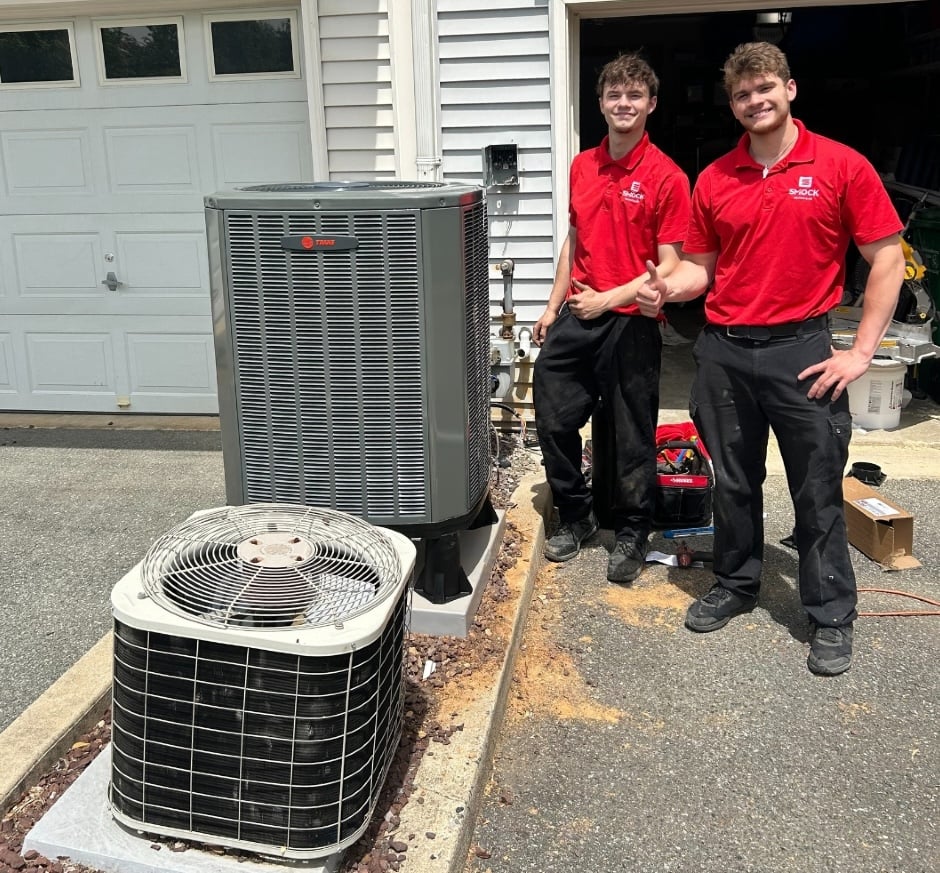
Every great HVAC installation starts with an accurate load calculation, and every comfortable, efficient home reflects a system that was properly sized from day one. At Smock, we never guess at equipment size. We perform thorough load calculations on every installation to make sure the system we recommend is genuinely the right fit for your home, your budget, and your long-term energy efficiency goals.
Our team serves Damascus homeowners with the kind of honest, detail-oriented service that produces lasting results rather than quick fixes. When you’re ready to invest in a system that will keep your home comfortable for years to come, contact our team to schedule your consultation today.

