



August 22, 2025
Water Heater Leaking? (8 Common Problems + Fixes)
Discovering a puddle of water around your water heater is a stressful experience for any homeowner. A leaking water heater can cause significant water damage, lead to costly repairs, and disrupt your daily routine. Understanding the potential causes can help you act quickly to minimize the damage and determine the best course of action.
This guide will walk you through the common issues that cause a water heater to leak, what to do when you find a leak, and when it’s time to call in the professionals. We will cover:
- 8 common water heater problems
- What to do when there’s a water heater leaking
- Repair or replace: making the right choice
- Choosing Smock HVAC for your water heater needs
👉 What to Do When Your Water Heater is Leaking
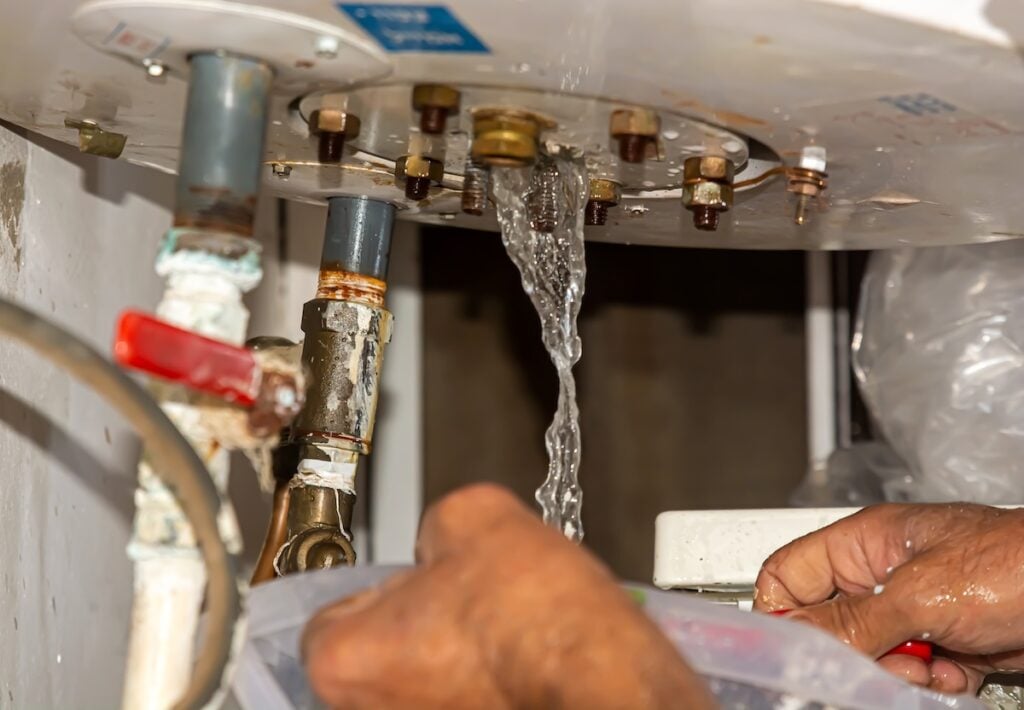
Finding a leak can be alarming, but taking immediate, calm steps can prevent further damage.
- Turn Off the Power: For an electric water heater, go to your circuit breaker and shut off the power to the unit. For a gas water heater, turn the gas control knob to the “OFF” position. This prevents any electrical hazards or gas leaks.
- Shut Off the Water Supply: Locate the cold water shut-off valve, which is usually on a pipe above the water heater. Turn the valve clockwise to stop the flow of water into the tank.
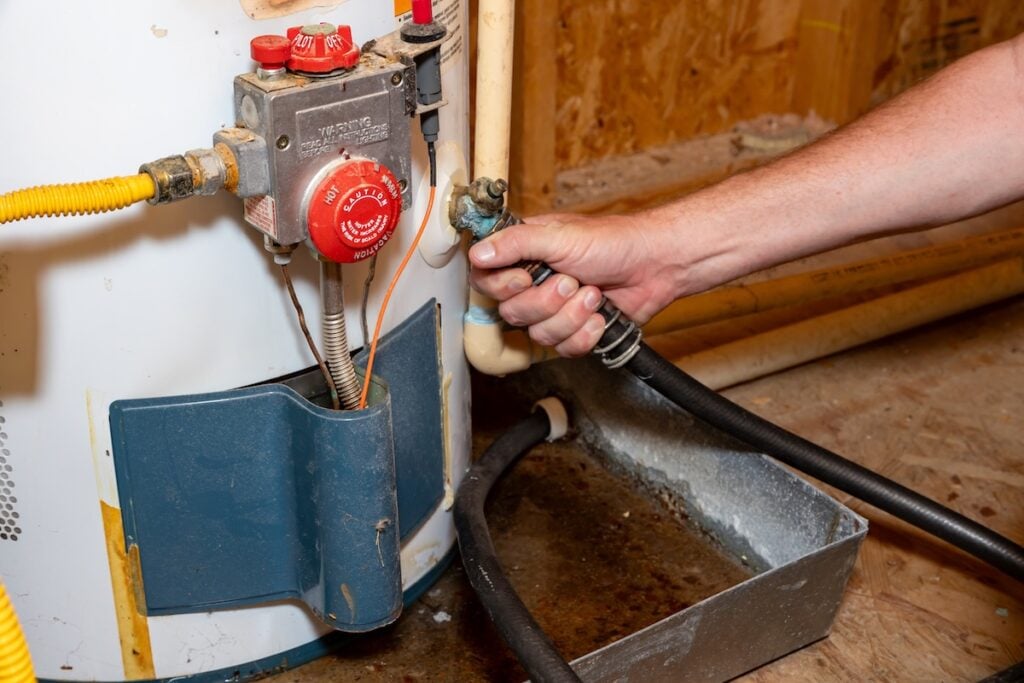
- Drain the Tank (if necessary): If the leak is significant, you may need to drain the tank to prevent a flood. Attach a garden hose to the drain valve at the bottom of the tank and run the other end to a floor drain or outside. Open the valve and a hot water tap in your house to let air in and help the water drain faster.
- Assess the Source: Once the immediate danger is handled, try to identify where the leak is coming from. Is it a valve, a pipe connection, or the tank itself? This information will be very helpful when you call a professional.
💧 8 Common Water Heater Problems
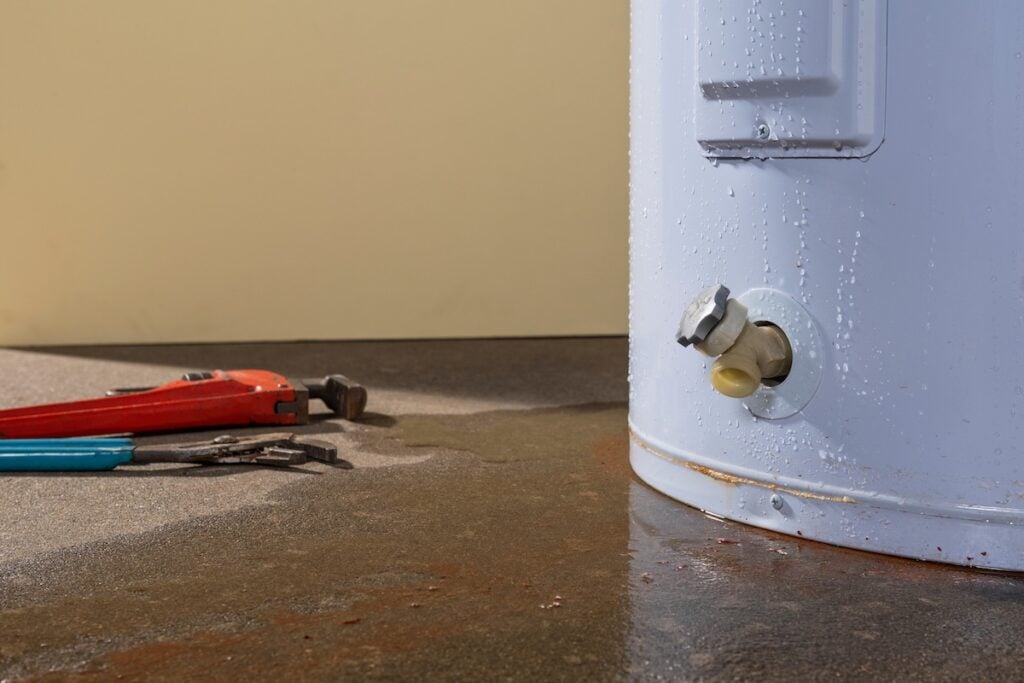
A water heater leak can originate from several different parts of the unit. Identifying the source is the first step toward finding a solution. Here are eight of the most common reasons your water heater might be leaking.
1. Loose or Faulty Drain Valve
The drain valve, located at the bottom of the tank, is used to flush out sediment. Over time, this valve can become loose or develop a fault in the seal, causing water to drip out.
- Regular usage and age can lead to wear, making the valve less effective over time.
- Dirt and sediment buildup around the drain valve can exacerbate leaks.
- In many cases, simply tightening the valve can solve the problem.
- If it continues to leak, the washer inside may be worn out and need replacement or the valve itself may need to be replaced.
2. Temperature and Pressure (T&P) Relief Valve Issues
The T&P valve is a crucial safety feature that releases water when the temperature or pressure inside the tank gets too high. If you notice water leaking from this valve, it could be doing its job correctly, indicating excessive pressure. However, the valve itself can also fail or get stuck, causing a continuous leak.
- Excessive pressure is often caused by high water temperature settings or a malfunctioning thermostat.
- Hard water deposits can clog the T&P valve, preventing it from sealing properly.
- Regular testing of the valve by lifting its handle can ensure it functions correctly.
- If the valve keeps leaking despite the tank being at normal pressure, it may need immediate replacement.
3. Corrosion and Tank Failure
This is one of the most serious causes of a water heater leaking. Over time, mineral deposits and sediment can build up inside the tank, leading to corrosion. Once the inner tank rusts through, a leak is inevitable. A corroded tank cannot be repaired and means the entire water heater unit needs to be replaced.
- Check for rust-colored water, which often signals internal corrosion.
- Inspect the exterior of the tank for rust spots or wet areas.
- Flush the tank periodically to minimize sediment buildup.
- Once corrosion leads to leaks, replacement is the only solution as repairs are ineffective.
4. Damaged Inlet and Outlet Connections
The cold water inlet and hot water outlet pipes are connected to the top of your water heater. These connections can loosen over time due to thermal expansion and contraction. A leak from these connections is often a simple fix that requires tightening with a wrench or replacing a worn-out gasket.
- Inspect the fittings regularly for signs of dripping or moisture.
- Use Teflon tape or pipe thread sealant to ensure a secure connection if tightening doesn’t stop the leak.
- Replacing old, corroded pipes or connections can prevent recurring leaks.
- Over-tightening can damage the threads, so adjustments should be made carefully.
5. A Faulty Anode Rod
The anode rod is a metal rod inside the tank designed to attract corrosive elements, protecting the tank itself. Once this “sacrificial” rod corrodes completely, the tank becomes vulnerable to rust. While a failing anode rod doesn’t directly cause a leak, its deterioration can lead to tank corrosion and eventual failure.
- Inspect the anode rod every 1-3 years, depending on water quality.
- Replace the rod when more than 75% of it has corroded.
- Use a wrench to remove the rod for inspection and replacement.
- Installing a higher-quality anode rod, such as a powered one, can provide longer-lasting protection.
6. Leaking Gaskets
Your water heater has several gaskets, particularly around the heating elements. These rubber or silicone seals can degrade and crack over time, allowing water to seep out. Replacing these gaskets is a relatively straightforward repair for a professional.
- Check for water pooling near the heating element or at the base of the tank.
- Deterioration is often caused by age or exposure to high temperatures.
- Turn off the water heater and drain the tank before replacing gaskets.
- Use high-quality replacement gaskets to ensure a proper seal and avoid recurring issues.
7. Condensation Buildup
Sometimes, what appears to be a leak is actually just condensation. This is common with gas water heaters, especially during colder months when the incoming water is very cold. The warm flue gases can cause moisture to form on the outside of the tank, which then drips onto the floor. If the “leak” stops after the tank has heated up, condensation is likely the culprit.
- Ensure proper ventilation around the tank to reduce excess moisture buildup.
- Insulating the tank with a water heater blanket can help minimize condensation.
- Check for other signs of leaks to confirm it’s not a more serious issue.
- If condensation persists, consider adjusting the thermostat to maintain consistent water temperature.
8. High Water Pressure
If the water pressure in your home’s plumbing system is too high, it can put excessive strain on your water heater and its components, leading to leaks from various points like the T&P valve or pipe connections.
- Install a pressure-reducing valve (PRV) if water pressure consistently exceeds 80 psi.
- Use a water pressure gauge to monitor levels regularly.
- High pressure can also stress other plumbing fixtures, so addressing it benefits the entire system.
- Sudden spikes in pressure may indicate an issue with the municipal water supply or your PRV.
⚖️ Repair or Replace: Making the Right Choice
Once you’ve managed the immediate situation, you need to decide whether to repair or replace your water heater.
- Age of the Unit: A typical tank water heater lasts about 8-12 years. If your unit is approaching or has surpassed this age, replacement is often the more cost-effective option in the long run.
- Source of the Leak: Leaks from valves or pipe connections are usually repairable. However, if the tank itself is corroded and leaking, replacement is your only option.
- Cost of Repair: Get a quote for the repair. If the cost is more than 50% of the price of a new unit, it’s usually better to invest in a new, more efficient water heater. A new model can also save you money on your energy bills.
🤝 Trust Smock HVAC for Your Water Heater Needs
A water heater leaking is more than just an inconvenience; it’s a sign that your home’s comfort system needs professional attention. At Smock HVAC, we understand the urgency and stress that come with plumbing emergencies. For over 20 years, our family-owned business has been dedicated to providing reliable, courteous, and expert service to our neighbors.
Our team of certified technicians is equipped to handle everything from minor repairs to full water heater replacements. We pride ourselves on transparent communication, providing detailed estimates, and ensuring our work causes minimal disruption to your home. We believe in building trust through exceptional customer care and a 100% satisfaction guarantee. Don’t let a leaking water heater disrupt your peace of mind.
Contact Smock HVAC today for a professional inspection and a solution you can count on.

