



July 28, 2026
HVAC Maintenance Checklist (10 Seasonal Tasks for Homeowners)
A solid HVAC maintenance checklist is the difference between a system that lasts 20 years and one that fails at 12, and the homeowners who get the most out of their equipment are almost always the ones who stay ahead of problems rather than reacting to them. Whether you handle a few tasks yourself or rely on a professional for the full seasonal tune-up and inspection, following a consistent hvac inspection checklist keeps your air conditioning systems and heating equipment running efficiently year-round. In this guide, we cover:
- Why seasonal hvac maintenance tasks matter for your home and budget
- The 10 most important items on every homeowner’s maintenance checklist
- What to handle yourself and what to leave to a licensed professional
- How proper upkeep affects air quality, energy costs, and system lifespan
We’re proud to serve homeowners in Frederick, MD, and nearby communities with heating, cooling, and water heater services, and more.
Why Seasonal Maintenance Makes a Measurable Difference
Most homeowners know maintenance matters but are less clear on what it actually does. According to the U.S. Department of Energy, neglected HVAC equipment can lose up to 5 percent of its operating efficiency for every year it goes without maintenance. Over a decade, that compounding inefficiency adds up to meaningfully higher energy costs and a system that wears out years before it should. Keeping your outdoor units clean, your filters fresh, and your thermostat settings calibrated is the single most effective thing a homeowner can do to keep the system operating efficiently between professional visits.
10 Seasonal HVAC Maintenance Tasks Every Homeowner Should Know
Some of these HVAC maintenance tasks are simple enough to handle yourself in a few minutes. Others require a professional, but knowing they exist helps you ask the right questions when scheduling service.
1. Replace Air Filters
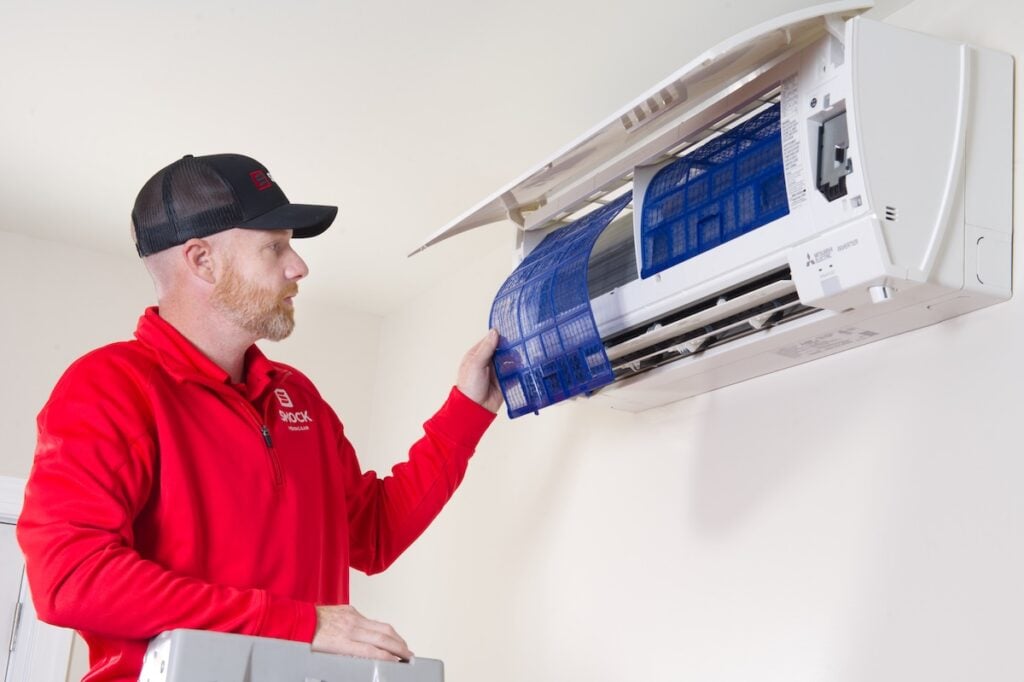
Replacing air filters is the most impactful task a homeowner can perform on their own and also the one most commonly neglected. A clogged filter restricts proper airflow, forces the blower motor to work harder, degrades air quality, and can cause the evaporator coil to freeze during cooling season.
- Frequency: Check monthly and replace every one to three months depending on household conditions.
- Pet and allergy households: Replace more frequently, often monthly, to prevent rapid clogging and maintain air quality throughout the home.
- Filter rating: Choose a MERV rating appropriate for your system, as overly restrictive filters can reduce proper airflow as much as a dirty one.
2. Clean the Outdoor Units
Outdoor units need clear airflow to release heat effectively. Over the course of a season, leaves, grass clippings, and debris accumulate on and around the outdoor units, reducing the ability of your air conditioning systems to do their job efficiently.
- Clearance: Maintain at least two feet of clearance on all sides of outdoor units throughout the year.
- Rinsing: Use a gentle garden hose spray to rinse debris from the condenser fins each spring before cooling season begins.
- Fin straightening: Bent condenser fins reduce proper airflow. A fin comb from any hardware store can straighten them carefully.
3. Inspect and Clean the Evaporator Coil
The indoor evaporator coil absorbs heat from your home’s air as the air conditioning systems run. Dust and grime accumulate on the coil surface over time, reducing heat transfer efficiency and driving up energy costs. This task is best left to a professional during an annual tune-up.
- Signs of a dirty coil: Reduced cooling performance, longer run cycles, and ice forming on refrigerant lines all indicate the coil may need attention.
- Frequency: Once per year as part of a professional cooling season tune-up is sufficient for most homes.
4. Check Thermostat Settings
Incorrect thermostat settings can cause your system to run more than necessary, increasing energy costs and adding unnecessary wear to the equipment. Taking a few minutes each season to verify your thermostat settings is one of the easiest items on the hvac inspection checklist.
- Basic test: Set the thermostat a few degrees above or below the current room temperature and confirm the system responds correctly within a few minutes.
- Smart thermostat upgrade: Upgrading to a programmable model can reduce energy costs by 10 to 15 percent through better scheduling.
- Calibration: If thermostat settings seem consistently off, a technician can recalibrate or replace the unit during a maintenance visit.
5. Clear the Condensate Drain Line
During cooling season, air conditioning systems remove humidity from the air and drain that moisture through the condensate drain line. Algae and debris can clog this line over time, causing water backup or an automatic shutoff that stops the unit from running.
- DIY prevention: Pour a cup of distilled white vinegar down the drain line access point near the air handler every few months to inhibit algae growth.
- Signs of a clog: Water pooling near the air handler, musty odors near the unit, or the system shutting off unexpectedly during cooling season.
6. Inspect Ductwork for Leaks
Leaky ductwork is one of the most underappreciated sources of HVAC inefficiency in residential homes. When conditioned air escapes into unconditioned spaces, the system works significantly harder to maintain thermostat settings and proper airflow throughout the home.
- Visual inspection: Check accessible duct sections in the attic, basement, or crawl space for visible gaps or disconnected joints.
- Sealing: Use mastic sealant or metal-backed tape to seal leaks. Standard duct tape degrades quickly and is not a reliable long-term fix.
7. Lubricate Moving Parts
Blower motors, fan motors, and other moving components require proper lubrication to operate efficiently and quietly. Friction from inadequate lubrication increases energy costs and accelerates motor wear over time.
- Frequency: Annual lubrication by a licensed technician during a scheduled tune-up is sufficient for most systems.
- Warning signs: Squealing or grinding noises during operation often indicate lubrication is overdue or a bearing has begun to fail.
8. Inspect Electrical Connections and Components
Loose or corroded electrical connections raise energy costs, generate excess heat, and create potential safety hazards. Capacitors and contactors should be inspected annually as part of a professional hvac maintenance visit to keep the system operating efficiently.
- Capacitors: A weakening capacitor often shows up as slow startups or intermittent failures before failing completely.
- Contactors: Pitted or burned contactors can prevent outdoor units from receiving power reliably, causing a mid-season breakdown.
9. Check Refrigerant Levels
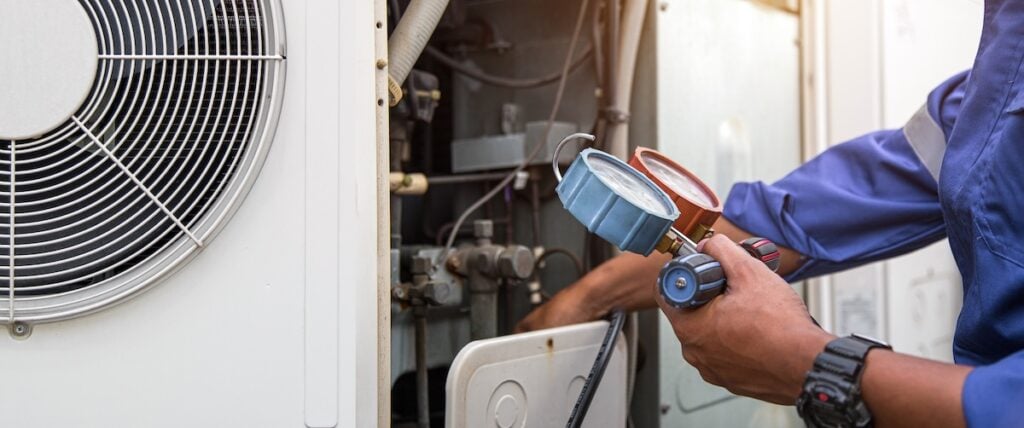
Air conditioning systems operate on a closed refrigerant loop that should not lose charge under normal conditions. Low refrigerant indicates a leak that must be located and repaired before recharging, and it is one of the more commonly missed items on a basic hvac inspection checklist.
- Signs of low refrigerant: Reduced cooling performance, ice on refrigerant lines, longer run cycles, and higher energy costs.
- Legal requirement: Only EPA-certified technicians can legally handle refrigerant. This is not a DIY task.
10. Inspect the Heat Exchanger and Carbon Monoxide Detectors
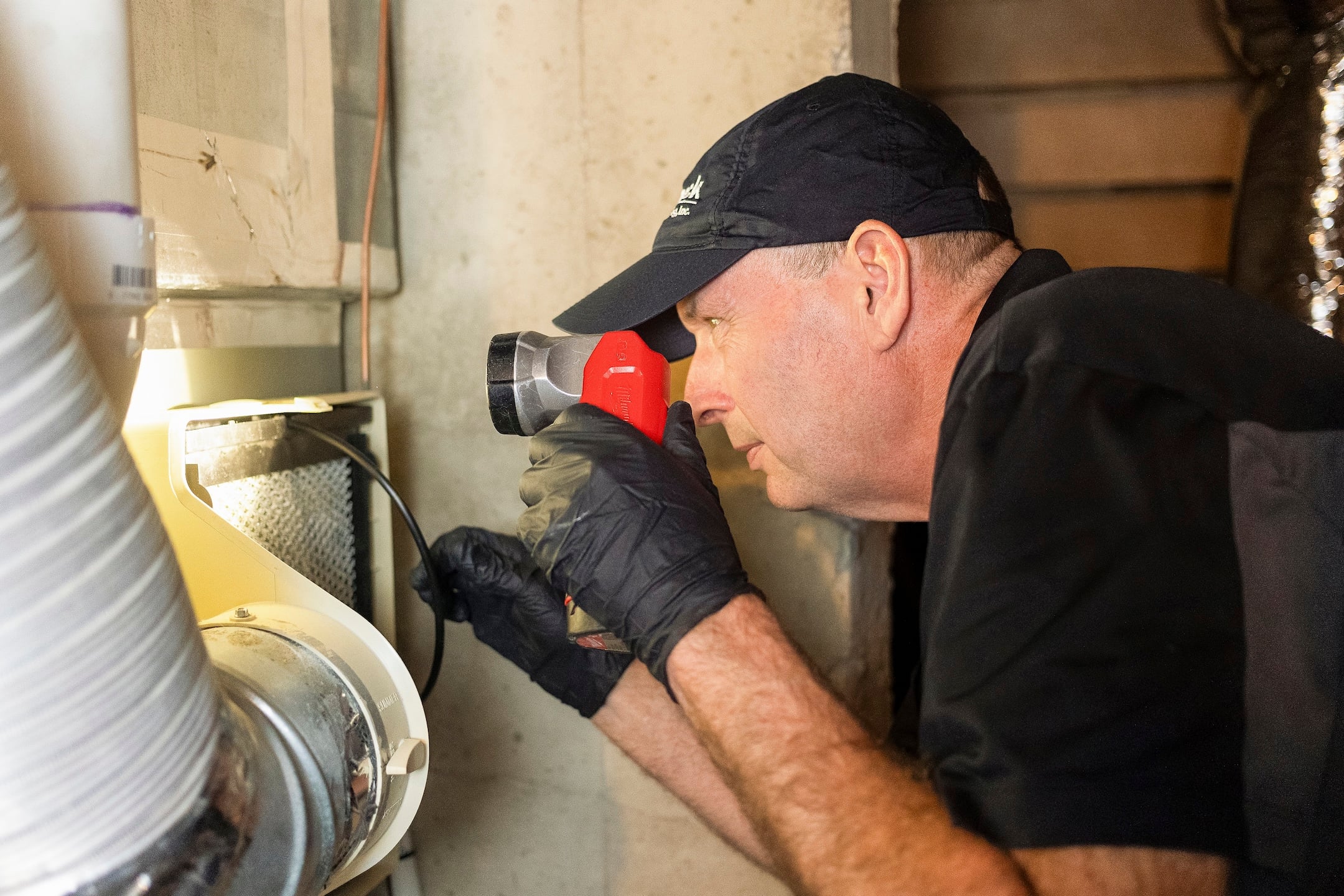
The heat exchanger is one of the most critical components in any gas furnace, and a cracked heat exchanger can allow carbon monoxide to enter your home’s air supply. This inspection should be part of every fall heating system tune-up without exception.
- Heat exchanger inspection: A licensed technician will visually inspect and test the heat exchanger for cracks or corrosion that could compromise safety.
- Carbon monoxide detectors: Confirm that carbon monoxide detectors on every level of your home are functioning correctly and replace batteries annually.
- Gas pressure check: A technician will also verify gas pressure is within the manufacturer’s specified range to ensure safe and efficient furnace operation.
DIY vs. Professional Maintenance Tasks
| Task | DIY Friendly | Requires a Pro |
| Replace air filters | Yes | No |
| Clean outdoor units | Yes | No |
| Condensate drain flush | Yes | No |
| Check thermostat settings | Yes | No |
| Evaporator coil cleaning | No | Yes |
| Refrigerant level check | No | Yes |
| Electrical component inspection | No | Yes |
| Motor lubrication | No | Yes |
| Heat exchanger inspection | No | Yes |
| Carbon monoxide detector test | Yes | No |
Frequently Asked Questions About HVAC Maintenance
Homeowners in Frederick and across the area often have similar questions about caring for their systems between professional visits. Here are honest answers to the most common ones.
How often should I schedule professional HVAC maintenance?
Most manufacturers and HVAC professionals recommend at least one professional tune-up per year, with twice-yearly service being the ideal schedule. Spring covers air conditioning systems and fall covers the heating system. Annual hvac maintenance keeps energy costs low, catches developing problems early, and is often required to keep manufacturer warranties valid.
What happens if I skip HVAC maintenance for a few years?
Skipping maintenance allows dirt to accumulate on coils, lubrication to degrade, electrical connections to loosen, and small refrigerant leaks to go undetected. Over time these issues compound into higher energy costs, reduced air quality, and a significantly shorter system lifespan.
Does HVAC maintenance actually extend system life?
Yes, consistently and meaningfully. Air conditioning systems and heating equipment that receive regular professional maintenance routinely reach or exceed their rated lifespan of 15 to 20 years. Neglected systems frequently fail well short of that range, often requiring costly repairs that annual tune-ups would have prevented.
Can I do my own HVAC maintenance to save money?
Some tasks like replacing air filters, checking thermostat settings, clearing outdoor units, and flushing the condensate drain are well within reach of most homeowners. Others including refrigerant handling, heat exchanger inspection, and motor lubrication require professional tools and certifications. A combination of consistent DIY upkeep and annual professional service is the most effective approach.
How do I know if my system needs maintenance or repair?
If your system is running longer cycles, producing higher energy costs, struggling to maintain thermostat settings, making unusual noises, or has not been professionally serviced in more than a year, it is time to schedule a visit. A qualified technician can quickly distinguish between a system that needs hvac maintenance and one that requires a specific repair.
Keep Your System Running Strong With Smock HVAC
A consistent maintenance checklist is the foundation of air conditioning systems and heating equipment that perform reliably for years, not just seasons. Whether you are establishing a regular tune-up schedule, catching up after deferred hvac maintenance, or getting a professional assessment of where your system stands, Smock is here to help Frederick homeowners protect their comfort investment with honest, expert service.
Schedule your seasonal tune-up with the Smock team today and keep your home running at its best all year long.

