



July 27, 2026
Heat Pump Replacement: When to Upgrade & What to Expect
Your heat pump is one of the hardest-working systems in your home, handling both heating and cooling year-round without the luxury of a seasonal break. When it starts to struggle, knowing when to act can save you from unexpected breakdowns, rising energy bills, and uncomfortable Maryland summers and winters. Understanding heat pump replacement before you need it helps you plan ahead, budget wisely, and choose the right system for your home. In this guide, we cover:
- The most common signs your heat pump needs replacing
- How long heat pumps typically last and what affects their lifespan
- What the replacement process looks like from start to finish
- How to choose the right heat pump for your home
- What to expect in terms of cost, efficiency, and timeline
If you’re already noticing the signs of a failing system, our heat pump replacement services can walk you through your options and get your home comfortable again.
We’re proud to serve homeowners in Walkersville, MD, and nearby communities with heat pump installation, replacement, and HVAC maintenance services, and more.
How Long Does a Heat Pump Last
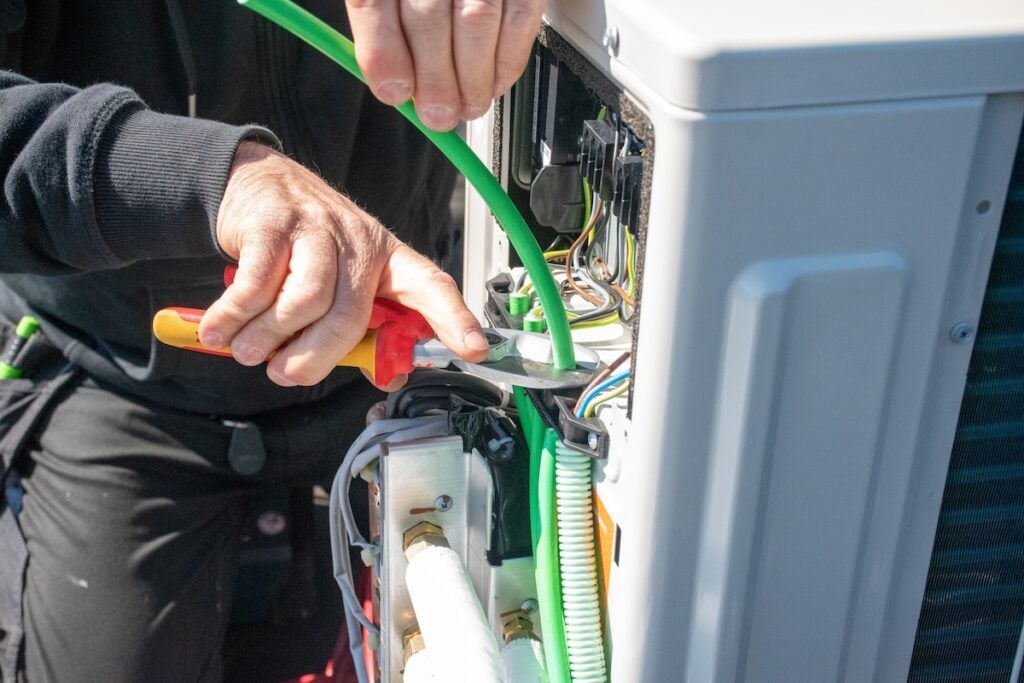
Before deciding whether to repair or replace, it helps to understand what a reasonable lifespan looks like for a heat pump. Most well-maintained heat pump systems last between 10 and 15 years, though some high-quality units can push closer to 20 years with consistent professional servicing.
Several factors influence how long your system holds up, including how hard it runs, whether it receives annual maintenance, and the local climate conditions it operates in. In Maryland, where heat pumps work through both humid summers and cold winters, systems tend to experience more wear than those in milder regions.
What Shortens a Heat Pump’s Lifespan
Even a well-installed heat pump can fail prematurely if certain conditions work against it. Understanding these factors helps you protect your investment and catch problems before they become full system failures.
- Skipped maintenance: Heat pumps that go years without professional servicing accumulate dirt, lose refrigerant efficiency, and wear down components faster than systems that are tuned up annually.
- Oversized or undersized equipment: A system that is not properly matched to your home’s heating and cooling load short-cycles frequently, putting excessive strain on the compressor.
- Poor installation: Improper refrigerant charging, incorrect airflow setup, or faulty electrical connections during the original installation can shorten system life significantly.
- Extreme weather demands: Heat pumps working through Maryland’s full range of seasonal temperatures run more total hours per year than systems in moderate climates.
8 Signs You Need a Heat Pump Replacement
Knowing when your heat pump has reached the end of its useful life is just as important as knowing how to maintain it. Here are the eight most telling signs that a replacement is the smarter move.
1. Your System Is Over 10 to 15 Years Old
Age alone is not always a reason to replace a heat pump, but it is the most important factor to weigh alongside everything else. A system approaching or past the 15-year mark is operating with older technology, reduced efficiency, and components that are increasingly likely to fail. At this stage, investing in repairs often makes less financial sense than putting that money toward a modern, high-efficiency replacement.
2. Energy Bills Are Climbing Without Explanation
If your monthly heating and cooling costs have been rising steadily without a change in usage habits or utility rates, your heat pump is likely losing efficiency. Older heat pump systems lose their ability to transfer heat effectively as components wear, forcing them to run longer cycles and consume more electricity to reach the same result. A new heat pump replacement with a high SEER2 and HSPF2 rating can dramatically reduce your home’s energy consumption.
3. Repairs Are Becoming Frequent and Costly
One or two repairs over the life of a heat pump is normal. But if you find yourself calling for service every season, or facing a single repair bill that runs into the thousands, the math often favors replacement. A useful benchmark is the 5,000 rule: multiply the system’s age by the estimated repair cost. If the result exceeds $5,000, replacement is typically the wiser investment.
4. The System Struggles to Heat or Cool Your Home
A heat pump that runs constantly but never quite reaches the thermostat setting is a heat pump in decline. This can result from refrigerant loss, a failing compressor, or severely degraded components that can no longer move heat efficiently. When your home feels uncomfortable despite the system running, it is a strong signal that replacement is overdue.
- Uneven temperatures: Some rooms significantly warmer or cooler than others despite the system running normally.
- Long run cycles: The system runs for extended periods without cycling off, indicating it is working harder than it should.
- Slow recovery time: The home takes much longer than usual to reach the set temperature after a setback period.
5. You’re Hearing Unusual Noises
A properly functioning heat pump operates with a consistent, relatively quiet hum. Grinding, rattling, squealing, or banging sounds coming from the indoor or outdoor unit are signs of mechanical problems that range from loose components to failing motor bearings to compressor issues. While some noises can be addressed with targeted repairs, persistent or worsening sounds on an older system often point toward the need for full heat pump replacement.
6. The System Uses R-22 Refrigerant
R-22, also known as Freon, was phased out of production due to its environmental impact and is no longer manufactured in the United States. Heat pump systems that still rely on R-22 are increasingly expensive to service because the refrigerant itself has become scarce and costly. If your system uses R-22, replacement with a modern unit using R-410A or R-454B refrigerant is almost always the more practical and cost-effective path forward.
7. You’re Seeing Ice Buildup on the Unit
Some frost on the outdoor unit during winter heating cycles is normal and typically clears during the system’s defrost cycle. But heavy ice accumulation that does not clear, or ice forming on the unit during cooling season, points to refrigerant issues, airflow problems, or a failing defrost control. On an aging heat pump, these issues often signal broader system decline rather than isolated component failures.
8. Indoor Air Quality Has Declined
An aging heat pump that is no longer cycling air efficiently can contribute to increased dust, humidity imbalances, and stale air throughout the home. If you have noticed more dust on surfaces, increased allergy symptoms, or rooms that feel stuffy despite the system running, your heat pump may no longer be managing airflow and filtration at the level your home needs.
What to Expect During Heat Pump Replacement
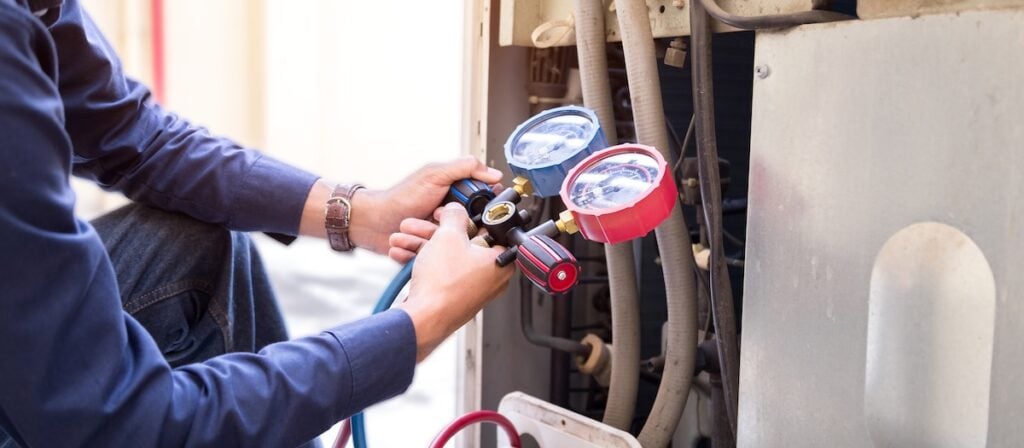
Many homeowners feel uncertain about what the replacement process actually involves. In practice, a professional heat pump replacement is a well-organized process that most experienced HVAC teams can complete in a single day.
According to the U.S. Department of Energy, heat pumps can reduce electricity use for heating by approximately 65 percent compared to electric resistance heating. Upgrading to a modern system is one of the highest-impact efficiency improvements a homeowner can make.
The Replacement Process Step by Step
- Home assessment: A technician performs a load calculation to determine the correct system size for your home’s square footage, insulation, and layout.
- System selection: Based on the assessment, your contractor recommends heat pump models that match your efficiency goals and budget.
- Old system removal: The existing indoor and outdoor units are safely disconnected and removed, including proper refrigerant recovery.
- New system installation: The new heat pump is installed, refrigerant lines are connected or replaced as needed, and electrical connections are completed.
- Testing and commissioning: The system is tested across heating and cooling modes to confirm proper operation, airflow, and thermostat communication.
- Walkthrough: Your technician walks you through the new system’s controls, filter location, and maintenance schedule before leaving.
Choosing the Right Heat Pump for Your Home
Not all heat pump systems are built the same, and the right choice depends on your home’s layout, your existing ductwork, and your efficiency goals.
| System Type | Best For | Efficiency Range | Key Advantage |
| Standard split heat pump | Homes with existing ductwork | SEER2 14 to 18 | Familiar setup, cost-effective |
| High-efficiency split heat pump | Homeowners focused on energy savings | SEER2 18 to 22+ | Lower operating costs long-term |
| Cold-climate heat pump | Regions with harsh winters | SEER2 18 to 20+ | Maintains efficiency below freezing |
| Ductless mini-split heat pump | Homes without ductwork, additions | SEER2 16 to 30+ | Zoned control, no ducts needed |
| Dual-fuel heat pump | Homes with existing gas furnace | SEER2 15 to 20 | Gas backup for extreme cold |
Frequently Asked Questions About Heat Pump Replacement
Homeowners considering a new heat pump often have similar questions before committing. Here are straightforward answers to the most common ones.
How much does heat pump replacement cost?
Most residential heat pump replacements range from $5,000 to $12,000 installed, depending on the system type, efficiency rating, and installation complexity. Homes requiring new refrigerant lines, upgraded electrical service, or ductwork modifications will fall toward the higher end of that range.
Is a heat pump worth it in Maryland’s climate?
Yes. Modern cold-climate heat pumps operate efficiently well below freezing, making them a practical year-round solution for Maryland homeowners. The ability to handle both heating and cooling from a single system also simplifies maintenance and reduces the total number of HVAC components in your home.
Can I replace just the outdoor unit?
In some cases, yes, but it depends on the age and condition of the indoor unit. Mismatched components can reduce efficiency, void manufacturer warranties, and cause operational problems. A qualified technician can assess whether a full system replacement or a single-component swap makes more sense for your situation.
Are there tax credits available for heat pump replacement in 2026?
Yes. Under the Inflation Reduction Act, homeowners can claim a federal tax credit of up to 30 percent on qualifying heat pump installations through 2032, up to applicable annual limits. Maryland also offers additional state-level incentives through the EmPOWER Maryland program. Ask your contractor which systems qualify before purchasing.
How long does heat pump installation take?
Most standard heat pump replacements are completed in one day by an experienced installation crew. More complex projects involving new refrigerant lines, ductwork modifications, or electrical panel upgrades may extend the timeline to two days.
Make the Right Move With Smock HVAC
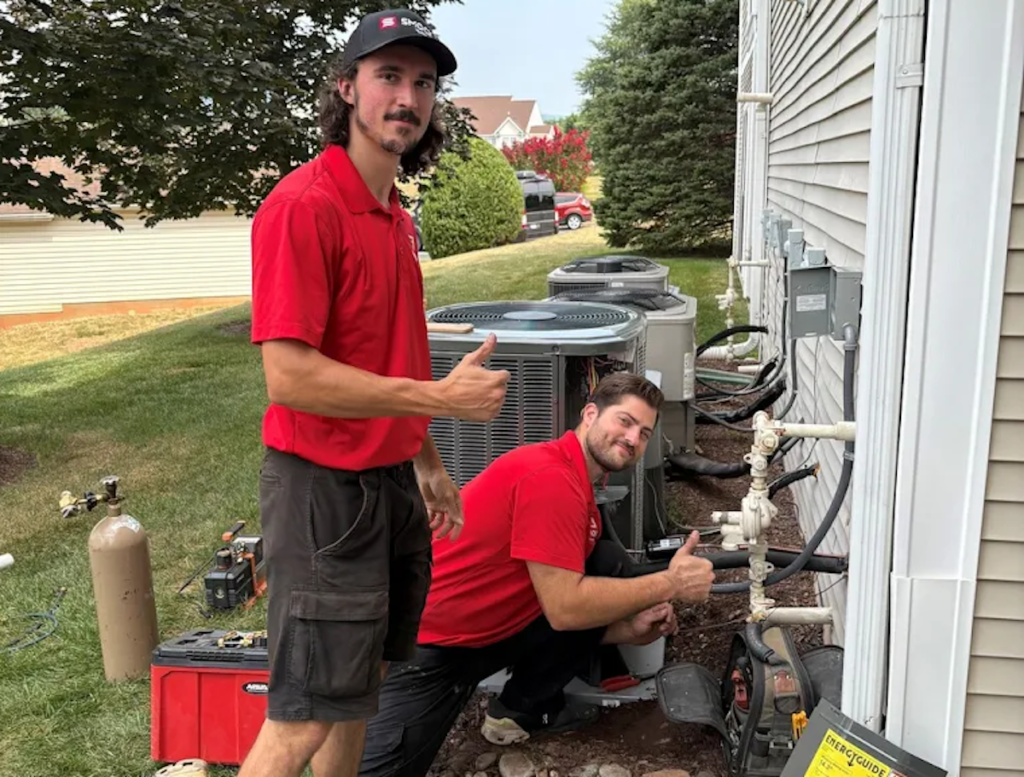
A heat pump replacement is a significant decision, and you deserve honest guidance from people who know the equipment and understand your home’s needs. At Smock, we help Walkersville homeowners navigate every step of the process, from initial assessment to final walkthrough, with transparent pricing and zero pressure.
Whether your current system is showing its age or you’re ready to upgrade to a high-efficiency model, contact our team to schedule your free estimate and find out exactly what your home needs.

